

Exploring Holidays in Germany: A Slow Travel Guide
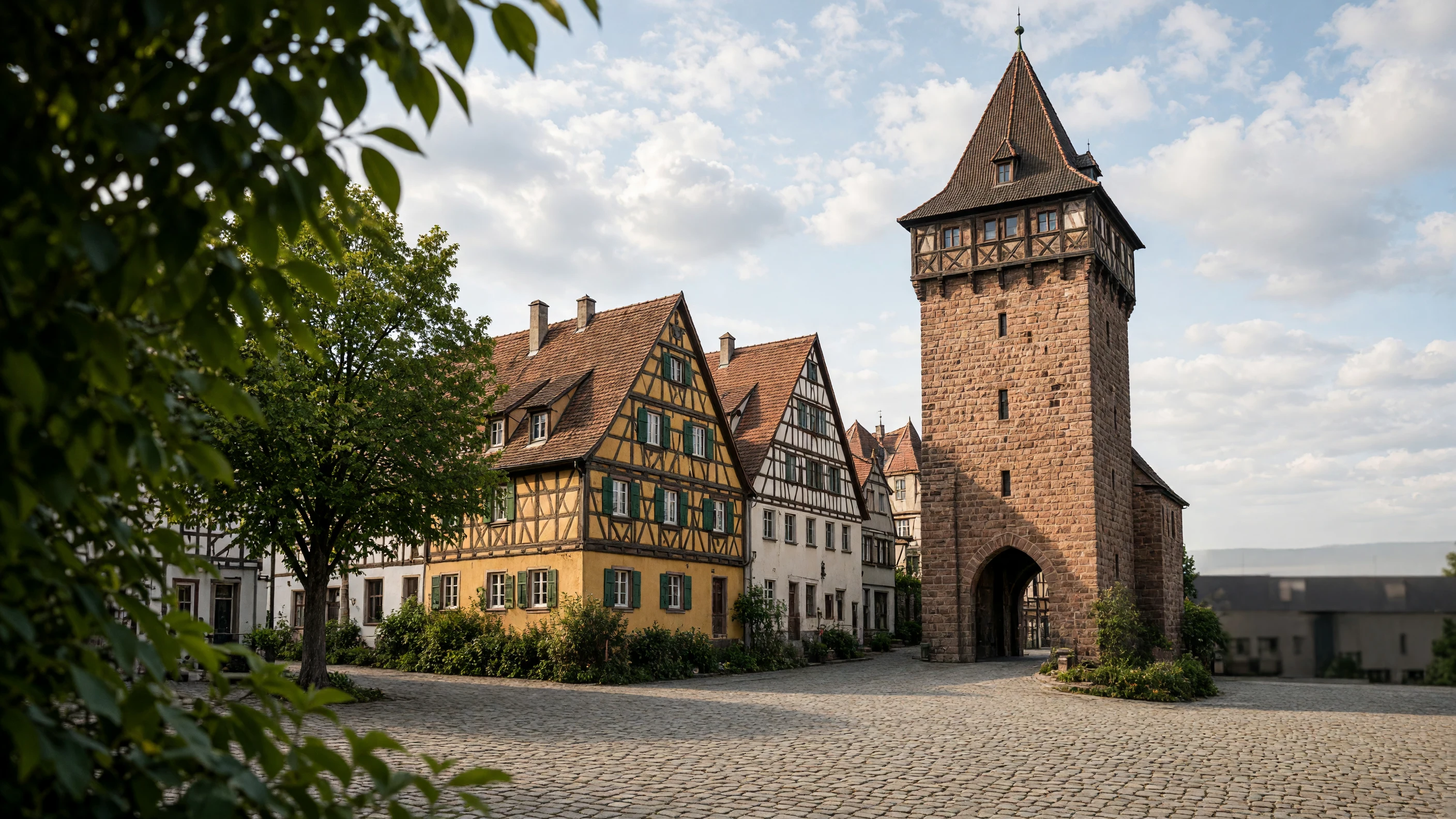
You get off the train at Gengenbach and the first thing you notice is that nobody is hurrying. The platform empties in about ninety seconds. The town gate is a four-minute walk up a slope of cobbles worn round at the edges by six centuries of carts and shoes. Exploring holidays in Germany tends to start like this: quietly, with a small station and a town wall, rather than with anything you'd put on a postcard.
That's what people miss when they plan a trip here. The country doesn't hand you its best bits at the station. You have to walk in a bit.
Why the small towns beat the big ones for a first week
Berlin is wonderful and I'd not talk anyone out of it, but for a week-long holiday it can swallow you whole. You spend forty minutes on the U-Bahn to see one thing and then forty more to see the next, and by Thursday your feet hurt and you've seen four streets properly. Smaller places work differently. A town of twenty thousand people has one square, one church worth the name, a river you can walk round in an hour and a bakery that opens at half six. You'll know it by Tuesday.
Take the Black Forest towns along the Kinzig valley. Gengenbach, Haslach, Wolfach, Schiltach. Each is about twenty minutes from the last by the regional train, which runs hourly and costs under ten euros for a return between any two of them. The ticket machines take cards now; they didn't until a couple of years back, and I once watched a man in a raincoat feed a machine eleven euros in coins while the train sat there. He made it. The train waited for him.
What you get for that tenner is half-timbered houses leaning at angles that look structurally unwise, a river with a working mill, and a market square where the only thing happening on a Tuesday morning is two pensioners and a dog. That's not a complaint. It's the point.
How to move around without a car
The German rail network is dense in a way that British travellers find hard to picture until they're in it. Almost every town of any size has a station, and the regional trains connect without fuss. The catch is the price if you buy on the day: a return from Freiburg to Titisee can set you back twenty-odd euros, and the fares climb quickly if you're moving daily.
So buy the passes. The Deutschland-Ticket costs 58 euros a month and covers every regional train, tram, bus and U-Bahn in the country. You can't use it on the fast intercity trains, and a lot of visitors don't realise that until they're standing on a platform watching an ICE pull away without them. But for a holiday spent moving between small towns, it's very hard to beat. Twenty-five euros for a week's worth of buses and slow trains is money well spent. That's wrong, actually: the ticket is a monthly subscription at 58 euros, so a week's holiday uses about a seventh of it. Even so.
There's also the Länder tickets, which give a group of up to five people unlimited travel in one federal state for a day. Twenty-five to thirty euros, depending on the state, and they work from nine in the morning. Families use them heavily. So do groups of friends who've worked out that splitting the cost is cheaper than five singles.
Where you'll sleep, and what it'll cost
Guesthouses, mostly. The German Gasthof or Pension is a sturdy thing: a room above a restaurant, a firm mattress, a thick duvet, and breakfast included. Fifty to eighty euros a night for a double is normal outside the cities, and it includes bread, cheese, cold meat, boiled eggs and coffee that arrives in a pot. The eggs are always boiled. I've never worked out why. You'll get a small card at check-in, the Gästekarte, which gives you free or reduced entry to local pools, museums and sometimes the cable cars.
Self-catering cottages and apartments sit in the same price band, and they make more sense if you're staying put for a week. There's a surcharge you should watch for: the Kurtaxe, a tourist tax of one to three euros per person per night, charged separately in spa towns and health resorts. It appears on your bill at the end. Nobody mentions it at booking, in my experience.
Book ahead for anything in July and August, especially in the Black Forest, the Baltic coast and the Bavarian Alps. June and September are quieter and cheaper, and the weather's usually just as good. May is a gamble. So is October, but the woods are better then.
Food, and how to eat well without trying
You'll eat a lot of pork. Best to make peace with that early. Schnitzel, Bratwurst, Maultaschen if you're in Swabia, smoked ham and dark bread in the Black Forest. A main course in a village Gasthof runs twelve to eighteen euros and will defeat most appetites. The beer is cheaper than the soft drinks, which tells you something about the local priorities.
Bakeries are where the country really performs. A Bäckerei opens at half six or seven, sells pretzels for under a euro and proper coffee for two-fifty, and has three or four small tables where retired men sit and read the paper. You can breakfast there for five euros and nobody will hurry you out. Do that instead of paying fifteen at the hotel, at least once. Order a Körnerbrötchen and a coffee and sit by the window.
One warning: Sundays. Most shops shut, including supermarkets, and in smaller towns the options for lunch narrow to the guesthouse restaurant and the bakery counter at the station. Plan for it. Arrive on a Saturday with bread, cheese and a couple of apples in your bag and Sunday stops being a problem.
If you're in Bavaria between late September and early October, book your accommodation in January. Not because it's impossible later, but because the good rooms go and the prices double at the ones that don't.
Things worth doing that cost nothing
Walking is the national pastime, and it's free. Every town has signposted Wanderwege, well-marked trails with yellow signs giving the destination and the walking time in minutes. The times are accurate, unlike the ones on British footpaths, which I've learned to double. A two-hour loop from most Black Forest towns gets you into beech woods, past a farm selling eggs from an honesty box, and up to a viewpoint with a bench and a wooden cross. Then back down.
Swimming lakes are free and everywhere. The Baggersee, a flooded gravel pit with a grassy bank and a wooden jetty, is a fixture of the German summer. No entry fee, no lifeguard, cold water that takes your breath away for the first thirty seconds. Take a towel and go in the late afternoon when the families have gone home.
Some days I did nothing at all. Sat on the wall by the river at Schiltach with a book for three hours, watched a man repair a wooden bridge plank by plank, and ate a pretzel. It rained at two o'clock. That was the best afternoon of the trip, though I'd struggle to explain why to anyone who wasn't there.
The bits that aren't wonderful
It's not all walled towns and cheap pretzels. The German countryside is heavily worked, and you'll notice it: industrial estates on the edge of towns, wind turbines on the ridges, the constant low hum of a motorway in the distance. Some valleys are prettier in photographs than on foot. The Romantic Road, in particular, has long stretches of agricultural nothing between the stops, and the coaching crowds at Rothenburg make the town square hard to cross between eleven and three. I'd skip it.
Also, the sausage dishes pile up. By day six you'll be craving something green and unsmoked. Find a Turkish place, or an Italian one, or a market stall with a proper salad, and don't feel bad about it.
There's a particular boredom to a small German town on a wet Monday. Everything's shut, the one café closes at two, and you've read both the leaflets in the tourist office. It happens. Take the train somewhere bigger for the afternoon.
Towns worth putting on the list
- Gengenbach: walled, half-timbered, hourly trains to Offenburg, and a working monastery garden up the hill.
- Quedlinburg: in Saxony-Anhalt, over a thousand timber-framed houses, and the station is a fifteen-minute walk from the old town.
- Bacharach: on the Rhine, a short walk from the ferry, with a castle ruin you can climb for three euros.
- Meersburg: on Lake Constance, two castles, ferries across to Konstanz, and swimming from the lakeside lido.
- Lübeck: bigger, but the old island is compact, the marzipan is genuinely good, and the station is right at the edge of it.
Each of these has a Gästekarte, a bakery, a church you can climb and a walk out of town that takes under two hours. What more do you want from a week.
Practical bits, in no particular order
Cash still matters. Maybe half the bakeries and small guesthouses take cards, and the ones that don't tend to have a sign that's easy to miss. Carry twenty or thirty euros.
Recycling is serious and slightly baffling. Bottles carry a deposit of eight to twenty-five cents, refunded at the machine in the supermarket. Keep them. The pfand machine will take them all and give you a receipt to spend in the shop.
Trains are punctual, mostly, but the connections are tight and a seven-minute change in a station with four platforms can be done. Watch the board. Announcements are in German first and English second, if at all.
The trains don't run all night on regional lines. The last one out of most small towns is between ten and eleven, and after that it's a taxi or a long walk. Plan your evenings around that. Or don't, and find out.
Some of what I've said about fares may have shifted since. The Deutschland-Ticket price has moved once already and could move again; check before you buy. The Länder ticket rules vary by state and change with the seasons. Assume the numbers are indicative and ring the tourist office if a particular one matters to you.
Learn four words. Bitte, danke, Entschuldigung, and zahlen. That's please, thanks, sorry and the bill. It covers about ninety per cent of what you'll need in a shop or a restaurant, and people warm to the attempt even when you mangle the vowels.
One last thing. Sunday closing is real, and it catches out everyone the first time. Buy your bread on Saturday. Buy two.
The station clock at Gengenbach is two minutes fast, and has been for as long as anyone's bothered to check.
Further reading: Black Forest on Wikipedia.