

Exploring a Holiday in France: A Practical Guide
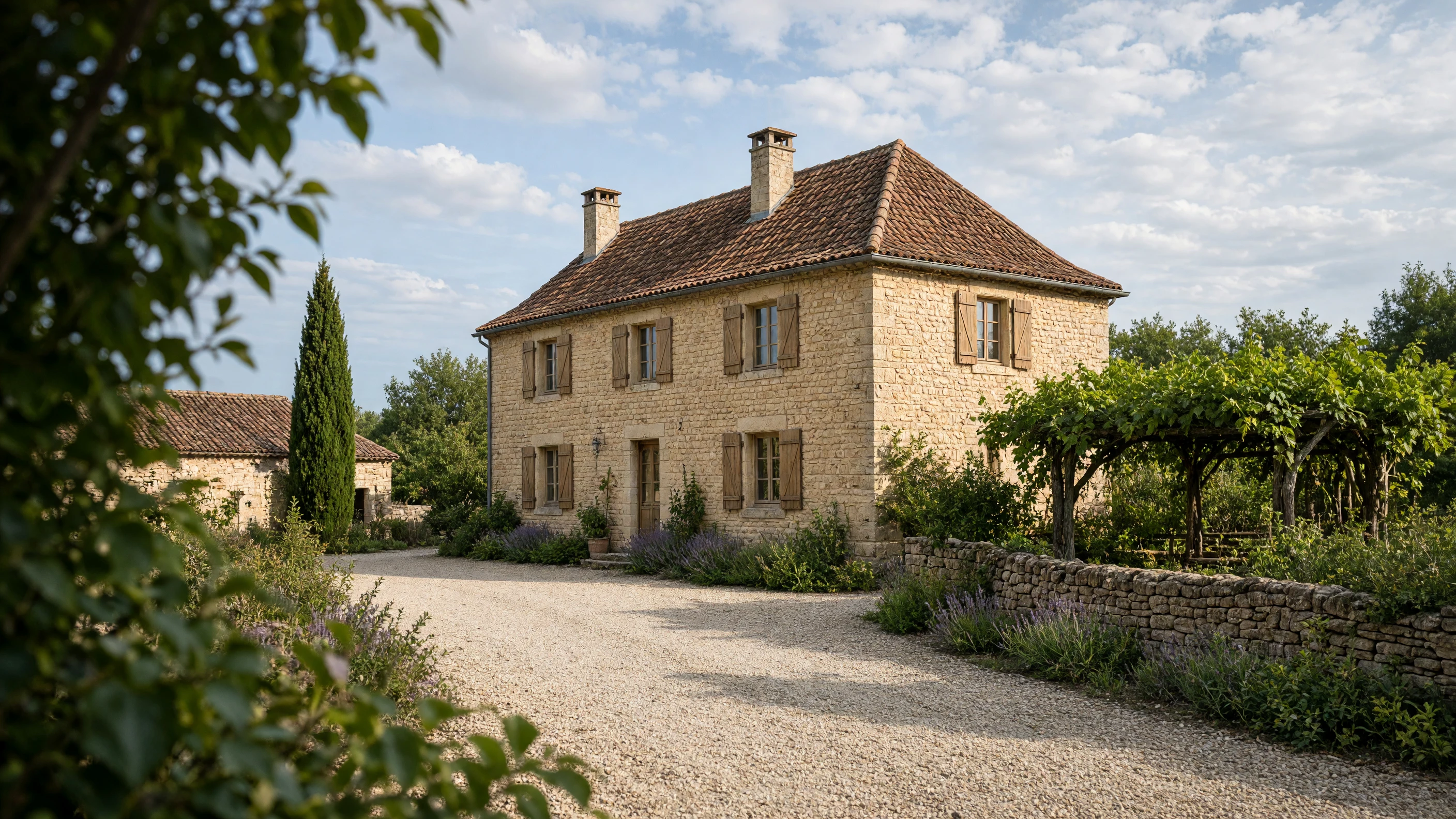
Exploring a holiday in France usually starts with a decision about the car, because the answer changes what kind of trip you get. If you're driving down from the ferry, you've got room for a cool box, a proper coffee pot and the folding chairs you'll use twice. Flying narrows everything.
You'll spend the first evening working out which supermarket is nearest and whether the village has a bakery that opens on Mondays, which in a lot of places it doesn't.
The gîte you booked is probably somebody's converted barn or a spare floor of a farmhouse. That's the appeal. It also means the bathroom might be under the stairs and the wifi might not reach the bedroom. Neither is a disaster. Knowing it in advance saves you standing in a hallway at eleven at night holding a phone up to a window.
Choosing where to base yourself when exploring a holiday in France
Most first trips fail on geography rather than taste. People pick three regions and a ten-day window, then spend the middle four days on the autoroute. Pick one base. Maybe two if they're two hours apart and you're staying a fortnight.
Roughly speaking, the useful split is this: coast, river, or hill country. Coast gives you swimming and fish and a wind that gets up around four in the afternoon. River country gives you vineyards, flat cycling and market towns that take twenty minutes to walk end to end. Hill country is quieter, cheaper and involves a lot more gear changes.
A decent rule is that anything you can't reach in forty minutes shouldn't be on the daily list. You'll want a supermarket within fifteen. You'll want a boulangerie closer than that, though check the closing day: many shut one weekday plus Sunday afternoon, and the one weekday varies by town.
What to check before you book the house
Ask about the deposit and when it comes back. Some places hold 300 euros on a card for a week after you leave. Ask whether linen is included, because a surprisingly large number of French rentals charge 10 to 15 euros per person for sheets and towels, and it's rarely obvious from the listing.
Ask about the water pressure on the top floor. Nobody puts that in the photos.
Also worth confirming: whether the pool is heated, whether there's a barbecue you're allowed to use, and whether the owners live on site. None of these are deal-breakers. All of them change the shape of your week.
Driving, tolls and the bits nobody warns you about
Motorway tolls add up faster than people expect. A long north-to-south run can cost 70 to 90 euros in peage alone, paid by card at the barrier. The alternative routes are slower but often better: the old national roads pass through towns with a square, a church and a cafe that does a set lunch for 14 euros.
Villages on the D-roads tend to have a speed limit that drops to 50 as you enter, then a camera about 200 metres later. The signs are there. You just have to believe them.
Fuel is straightforward, though diesel and petrol pumps sit side by side and the nozzle colours aren't always logical. Petrol is usually the green one. Usually. If you get it wrong, the car will tell you within a kilometre, loudly.
Parking in old town centres is the other friction point. Many medieval cores have no street parking at all and one underground car park with a 1.9-metre height bar. If you've got a roof box, you'll be circling. Leave the box at the house and take the bus in.
The best days on a French holiday are almost always the ones with no plan beyond lunch.I should be honest about the market thing. Everyone tells you to go to the market. The big weekly markets are genuinely worth an hour, especially in smaller towns where the cheese stall takes cards and the man selling saucisson will let you try three before you buy. But they're also crowded, parking fills by half past eight, and if you arrive at ten you'll be queuing for tomatoes behind a hundred other people with the same idea. Go early or go to the smaller Tuesday market instead.
One digression: the plastic crates. Every market sells them, usually 5 euros, and every gîte has four stacked by the bin from previous guests. We've now got a small collection at home. I've no idea what to do with them and neither, I suspect, did anyone else.
Eating without making it a project
Lunch is the meal to spend on. A midweek lunch menu in a modest town restaurant often runs 15 to 19 euros for three courses, and it's the same kitchen that charges 32 for the evening version. Look for the words formule or menu du jour chalked on a board outside. If the board is handwritten and slightly smudged, so much the better.
Dinner at the house is easier than people think. The supermarket charcuterie counter is better than the packaged shelves, the rotisserie chickens come out around six, and a bag of green beans, a lemon and a knob of butter will do the rest. You'll eat outside. You'll be in bed by half ten.
Two practical things. First, many small restaurants close Monday and Tuesday, and some close for the whole of a school holiday because the owners are away. Second, the bread you bought at four is not the bread you bought at eight that morning; buy twice as much as you think and freeze half.
If you're travelling with children, the menu enfant is usually about 9 euros and usually a steak haché with fries. It is what it is. Most kitchens will do a plain pasta if you ask, and asking is fine.
Coffee, and the limits of the morning
An espresso at a bar counter costs about 1.20 euros. Sitting down at a table outside triples it. That's not a rip-off, it's just the rule: you're paying for the chair.
Ordering a café gets you an espresso, not a filter coffee. If you want milk, ask for a crème. If you want a large weak coffee with milk in a mug, you'll be making it at the house, and I'd bring a small jug-style filter if you're serious about it. We didn't, and spent ten days drinking espresso at seven in the morning out of politeness to ourselves.
Breakfast isn't a thing in the way you're used to. Bakeries do croissants until about eleven, then they stop and switch to sandwiches. Buy the night before if you want a lazy morning.
What a week actually looks like
You will have a list of six things. You'll do three. The other three will get replaced by a slow morning, a long lunch and an afternoon by the pool that turns into a swim at six when the heat drops.
That isn't a failure. The three you do will be better because you weren't rushing between them. A cave tour at eleven, a picnic at one, a walk at four: that's a full day, and it leaves room for the part where you sit in a plastic chair outside the house with a glass of something local and watch the light change on a wall.
Some specific things worth doing that don't need booking: church squares in almost any village, the local lavoir where the washing was done, a walk along a canal towpath with a lock every kilometre. Also the municipal swimming pool, which costs about 4 euros, has a lane for people doing lengths and a shallow end full of shouting. It's a good afternoon when the beach is windy.
Things that do need booking, often weeks ahead in July and August: the big caves, kayak hire on popular rivers, and any restaurant with a terrace that looks out over water. Ring them. The French phone manner is brisk and entirely fair.
I'm not certain the August crowds are as bad as people say, because we've mostly gone in June and September, when the roads are quiet and the prices are lower by a third. My suspicion is that August is exactly as bad as people say and everyone who tells you otherwise went in 2019 and got lucky.
September is the one I'd pick. The sea's still warm, the vineyards are being picked, and the woman at the market has time to explain which of the four melons is actually ripe.
The small frictions, listed plainly
- Shutters on old houses are wonderful until you realise you have to close them all before bed and open them all in the morning, and one of them sticks.
- Wasps at the outdoor table from mid-August. Not many. Enough.
- The supermarket closes 12.30 to 14.30 in smaller towns, and you will forget this at least once.
- Beach parking in high season costs 6 to 8 euros a day, and the machine takes coins only.
- Mosquitoes near any river after rain. Bring the plug-in.
- Some public toilets are just a hole and a tap, and the tap may not work.
None of that ruins a holiday. It just means the picture in your head of the perfect French week needs a small correction. The correction is that it's a real place with a real municipal council and a real bin collection at seven in the morning.
Money, plainly
A gîte for two in June runs 450 to 700 euros a week outside the coast, more like 900 near it. Food for two, cooking most nights and eating out three times, comes to about 250 euros. Tolls and fuel round to 150. Everything else is what you decide it is.
Cards are accepted almost everywhere now, including most markets, but keep 20 euros in coins for parking machines and the odd bakery that hasn't moved on.
Don't bother with traveller's cheques. Do bother with a card that doesn't charge for foreign transactions, because the 2.75 per cent adds up over a fortnight.
One more admission: we never made it to the cave. It was 45 minutes away, and the Tuesday we'd set aside turned into a lunch that ran to four o'clock. I don't regret it. The cave will be there.
If you're going for the first time, the honest advice is to book less than you want to, drive less than you planned, and buy the bread twice a day. Everything else sorts itself out in the queue at the boulangerie, where the woman in front of you will be buying a baguette, a tradition and a small quiche, and you'll copy her.
Take a spare adapter. The sockets are the two-pin type and the gîte will have one, in the kitchen, behind the kettle.
Further reading: Gîte on Wikipedia.